How Invisalign Aligners Are Custom Made
Anyone who has worn Invisalign usually notices the same thing after the first few trays. The aligners feel light, almost understated, but the fit is precise enough that even a small manufacturing error would be obvious within minutes. That combination, comfort paired with exactness, is what makes the custom-making process so interesting. These are not generic plastic shells trimmed to size. Each set is built around a digital map of one person’s teeth, bite, gumline, and treatment goals, then produced in a sequence designed to move teeth in controlled increments.
For patients, the aligner often looks simple. For the clinician and the lab, it is anything but simple. A finished tray represents diagnosis, treatment planning, biomechanics, software modeling, material science, and careful manufacturing. If any one of those pieces is off, the aligners may still look polished but they will not work as intended.
It starts long before the plastic is formed
The custom nature of Invisalign does not begin in a factory. It begins in the dental office, with records. In a well-run case, the first appointment is not just a quick scan and a smile. It is a data collection visit. The doctor needs to understand not only how the teeth look when a patient smiles, but how they fit together in function, whether there is crowding or spacing, where the roots are likely positioned, and whether the bite can handle the planned tooth movement.
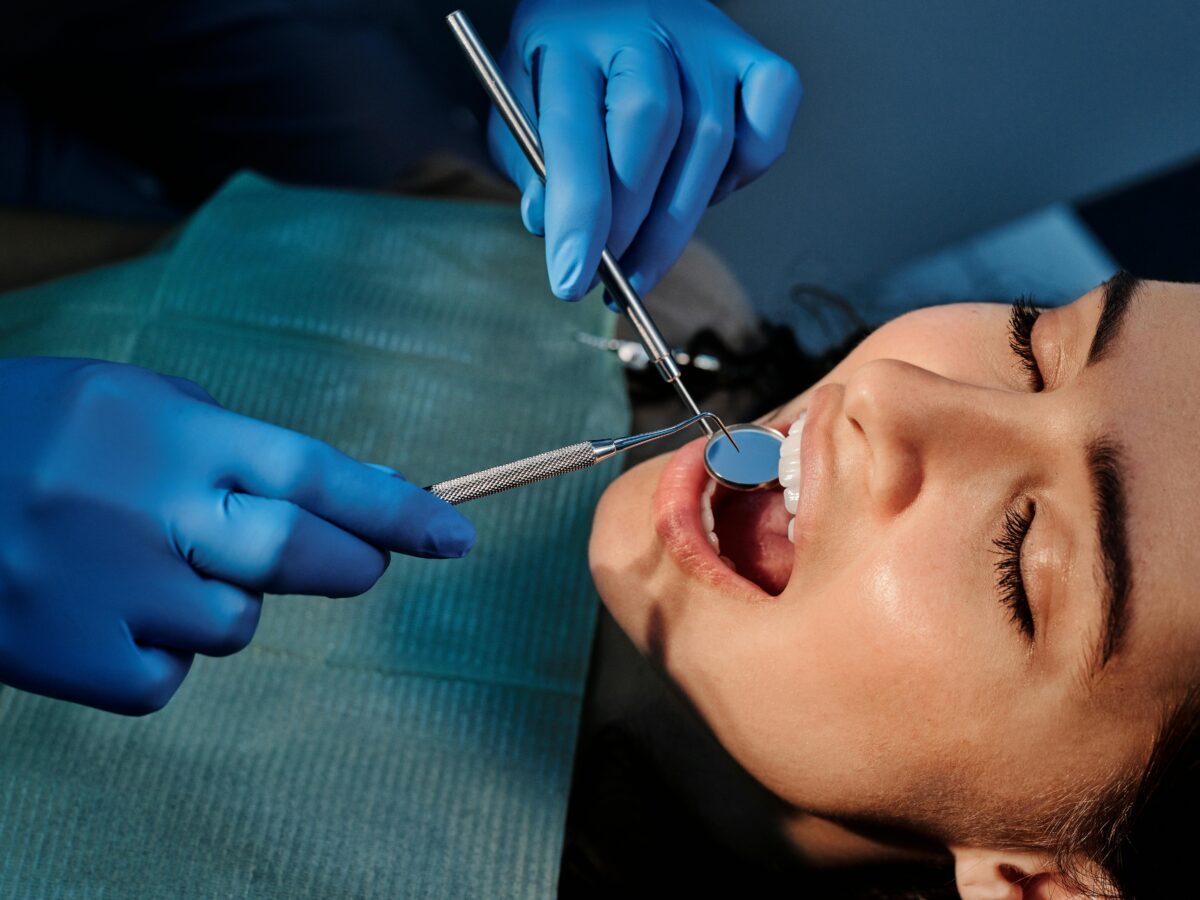
Most Invisalign cases begin with a digital intraoral scan. Instead of filling impression trays with putty and waiting for the material to set, the clinician uses a handheld scanner to capture thousands of images per second. Those images are stitched into a 3D model of the upper and lower arches. A good scan includes more than the visible front surfaces of the teeth. It also captures the biting edges, the tongue side, the gum margins, and the bite relationship between upper and lower teeth.
This matters more than patients often realize. If the scan misses a distal surface of a molar or blurs the gumline around a rotated canine, the aligner made from that data can fit poorly. In practice, scanning takes skill. Saliva control, retraction, and patient movement all affect accuracy. An experienced assistant or doctor knows when to rescan rather than accept a model that is technically complete but clinically weak.
Photographs are usually taken as well. These are not cosmetic extras. Full-face photos, profile images, and close-up smile views help the doctor assess midline position, tooth display, lip support, and facial symmetry. X-rays may also be needed, depending on the case. A scan shows crowns very well, but orthodontic movement affects roots and surrounding bone too. That is why a treatment plan should never rely on surface data alone.
The prescription is as important as the scan
A common misunderstanding is that Invisalign treatment is designed entirely by software. It is not. The software is powerful, but the prescription comes from the treating doctor. The doctor decides what should move, what should stay stable, how much expansion is realistic, whether teeth need enamel reshaping, whether attachments should be added, and whether the patient is better suited for aligners alone or a combination approach.
That distinction is worth emphasizing. Two patients with similar crowding can receive very different treatment plans if one has a deep bite, another has worn lower incisors, or one has a history of gum recession. Custom manufacturing only works well when the underlying plan respects biology. Teeth are not pieces on a screen. They move through bone, under forces that must be light and consistent enough to be safe but strong enough to be effective.
In real clinical settings, judgment often shows up in the margins. For example, a patient may want every lower tooth perfectly straight, but if achieving that requires pushing incisors too far outside the supporting bone, the wiser plan is a compromise that protects long-term health. That is still custom treatment. In many cases, it is better custom treatment.
Turning anatomy into a digital treatment sequence
Once records are uploaded, the case moves into a digital planning phase. Invisalign uses proprietary software to create a staged simulation of tooth movement. The program starts with the current tooth positions captured in the scan and then maps a path toward the intended final arrangement. This is where the case begins to look futuristic to patients, because the software can show teeth shifting tray by tray. Behind that visual simplicity, though, are dozens of small decisions.
The technician and doctor work with a virtual model of each tooth as an independent object. Each tooth can be tipped, rotated, intruded, extruded, translated, or torqued, but every one of those movements has limits. A rotation that looks minor on a screen can be stubborn in the mouth, especially with rounded teeth like canines or premolars. Vertical movement can be even more technique-sensitive. Intruding a front tooth by a fraction of a millimeter may sound trivial, yet that small adjustment can meaningfully change the bite.
This is one reason treatment plans often include attachments. These are the small tooth-colored bumps bonded to certain teeth during treatment. They are custom selected and positioned to help the aligner grip the tooth and deliver a specific force. Without them, some movements would be unreliable or inefficient. Patients sometimes dislike the idea of attachments because they make the tray slightly more noticeable up close. Clinically, they are often the difference between a case that tracks and one that drifts off course.
The digital plan also accounts for overcorrections. In orthodontics, the tooth’s actual response does not always match the idealized movement perfectly. Some teeth lag behind. Some rebound slightly. So a custom sequence may intentionally build in extra rotation or alignment in the virtual endpoint to compensate for known tendencies. That is not an error. It is part of how experienced treatment planning anticipates biology.
Why one patient receives 14 aligners and another gets 42
Patients often ask why the number of trays varies so much. The answer is not simply severity. It is the amount and type of programmed movement per stage, the wear schedule, and whether the doctor prefers smaller movement increments in more complex cases.
Each aligner typically represents a small step, often around a fraction of a millimeter of linear movement or a few degrees of rotation, depending on the tooth and objective. Those increments are intentionally modest. If the jump from one aligner to the next is too large, the tray will not seat fully and the tooth may stop tracking. A plan that looks efficient on a screen can fail in the mouth if it asks too much of the plastic or the biology.
A patient with mild upper spacing may move through treatment quickly because the mechanics are simple. Another patient with moderate crowding, bite correction, and rotated premolars may need a longer series even if the smile looks only somewhat more crowded at the start. Complexity is not always visible in a mirror.
Refinement is another part of the process. Many Invisalign cases do not end with the first set of trays. After the initial series is completed, the doctor rescans the teeth and orders additional aligners to fine-tune the result. Patients sometimes worry this means the first set failed. Usually it means the treatment is being finished carefully. Orthodontic treatment rarely follows a perfectly straight line from plan to endpoint, especially when human wear habits vary.
How the aligners are physically made
After the treatment plan is approved, manufacturing begins. This is where digital orthodontics becomes a physical object. For each stage of movement, a model of the teeth is produced, and a sheet of thermoplastic material is formed over that model to create the aligner.
Historically, aligner systems have relied on a process that uses sequential models, often 3D printed, for each stage. A physical model is created for aligner one, another for aligner two, another for aligner three, and so on across the full series. The plastic is then thermoformed over each model under controlled heat and pressure or vacuum. Once cooled, the formed tray is trimmed along a prescribed margin and polished so it seats accurately and feels comfortable against the gums.
Even though that summary sounds straightforward, the quality control burden is high. If the model is slightly inaccurate, if the forming process distorts the plastic, or if the trim line is inconsistent, fit suffers. Patients notice fit immediately. A custom aligner should snap over the teeth with gentle resistance, not rock loosely or dig aggressively into the tissue.
Material selection plays a major role here. Invisalign has used proprietary multilayer aligner materials designed to balance flexibility, strength, and force delivery. The plastic must be clear enough to be esthetic, resilient enough to resist cracking, smooth enough to be comfortable, and engineered to provide force over time rather than collapsing after a day or two of wear. Force decay is a real issue in orthodontic plastics. A tray that feels tight on day one but loses most of its useful activity too quickly will not move teeth predictably.
The trim line matters more than most patients imagine. Some aligners are cut scalloped around the gumline, while others use a straighter margin depending on system design and manufacturing choices. That edge affects retention, comfort, and how the tray interacts with attachments. A fraction of a millimeter too much or too little can change the way an aligner seats.
The small features that make a big difference
When patients compare trays side by side, they often focus on obvious differences in tooth positions. The less visible details are just as important. Pressure areas, attachment wells, bite ramps, precision cuts for elastics, and reservoir spaces for auxiliaries can all be built into the aligner design.
Bite ramps are a good example. These are small built-in ledges, often on the inside of upper aligners, that help open a deep bite by changing how the lower front teeth contact the tray. They are subtle to the eye but significant in function. Precision cuts are another example. If a case needs rubber bands to help shift the bite, the aligners may be manufactured with cutouts to accommodate those elastics.
Here are a few custom features commonly built into Invisalign aligners when the case demands them:
- Attachment shapes designed for specific tooth movements
- Bite ramps to help manage deep overbite cases
- Precision cuts for elastics during bite correction
- Extra relief areas where planned auxiliaries or composite features are used
- Trim patterns that influence retention and comfort
These details illustrate an important point. Custom does not mean only that the tray matches the teeth. It means the aligner is engineered to perform a set of biomechanical tasks for one specific patient.
Why attachments are planned digitally but placed by hand
One of the more interesting parts of the process is the handoff between virtual design and chairside execution. The software can specify that a rectangular attachment should sit on the upper right canine at a precise angle, but that attachment still has to be bonded onto the tooth in the real world.
To do that, the office receives a template aligner, often called an attachment template, with spaces corresponding to the planned attachment shapes. The clinician fills those spaces with composite, seats the template onto the patient’s teeth, cures the material, and removes the tray. What remains are the bonded attachments in the exact intended positions, assuming the template was fully seated and the bonding was done carefully.
This is one place where technique matters enormously. If an attachment is underfilled, overfilled, chipped, or placed on a tooth with contamination from saliva, it may not function as planned. In practice, a surprising number of tracking problems are not manufacturing failures at all. They stem from wear compliance, missed refinements, or attachment issues.
What can go wrong, even with a custom process
The word custom sometimes creates unrealistic expectations. A patient hears it and assumes perfection from tray one through final retainer. Orthodontic treatment is more nuanced. The aligners may be custom made, but teeth are still biologic structures responding in a living system.
Several things can interfere with fit or progress. Teeth with large existing restorations may not hold attachments as well. Short clinical crowns can reduce aligner grip. Significant crowding can make early trays feel especially difficult to seat. Bruxism can wear trays faster than expected. Wisdom teeth, eruption changes, or inconsistent wear can alter the way later aligners fit.
There is also the issue of timing. A tray that was manufactured accurately months ago may no longer fit if the patient stopped wearing aligners consistently for two weeks. The aligner did not change, but the teeth did, or rather failed to keep up with the planned sequence. That is why custom manufacturing has to be paired with custom monitoring. Good Invisalign care does not end when the box of trays arrives.
Doctors usually evaluate tracking by checking for gaps between the aligner and tooth surfaces, especially around incisal edges and attachments. Small halos can be acceptable. Larger spaces often signal that a tooth is lagging. Sometimes chewies, extra wear time, or a slower tray change schedule is enough. Sometimes the patient needs a rescan and a new set.
The role of refinements and midcourse corrections
One of the strengths of a digital aligner system is that it is adaptable. If a tooth does not move as predicted, the case can be rescanned and redesigned. In older orthodontic workflows, major changes often meant bending wires differently or remaking appliances from scratch. With Invisalign, a new scan can generate an updated treatment sequence based on the teeth’s current position.
This is not just a convenience. It is central to how custom treatment stays custom from beginning to end. A treatment plan made six months earlier may no longer be ideal after the patient’s bite settles or a stubborn rotation partially corrects. Refinement aligners allow the doctor to respond to what the mouth is actually doing, not just what the initial simulation expected.
In many offices, the best results come from cases that are reviewed actively, not passively. That means reassessing fit, bite contacts, attachment integrity, and patient habits rather than simply handing out the next few trays on schedule. The manufacturing may be highly advanced, but clinical oversight remains human work.
Why retainers are part of the same story
After active treatment, retainers are typically made using a similar custom workflow. A fresh scan captures the final tooth positions, and retainers are fabricated to hold them there. This is not an afterthought. Teeth have a strong tendency to relapse, especially during the months immediately after movement. The tissues around them need time to reorganize.
Patients sometimes assume their last Invisalign tray can serve as a permanent retainer. It usually cannot, at least not reliably for long-term retention. Active aligners and retainers are built for different purposes. Retainers are generally designed with durability and holding power in mind, while treatment trays are part of a sequential force system.
A well-made retainer should fit with the same kind of precision patients appreciated in the treatment aligners. If it does not, that can indicate movement has already begun or the retainer was made from inadequate records.
What patients can do to help the custom process work
The most sophisticated aligner in the world cannot move a tooth if it spends half the day in its case. Wear time remains one of the biggest determinants of success. Most patients are instructed to wear aligners around 20 to 22 hours a day, removing them only for eating, drinking anything other than water, and oral hygiene. That advice may sound repetitive, but it reflects the reality of how these trays work. They need sustained contact to deliver planned forces.
A few habits make a measurable difference:
- Seat each new tray fully and check for gaps
- Wear the aligners for the prescribed hours every day
- Keep attachments intact and report one that breaks off
- Store trays safely to avoid warping, cracks, or loss
- Attend review visits so the doctor can confirm tracking
Patients who do these simple things usually have smoother treatment, fewer refinements, and less frustration.
The real meaning of custom in Invisalign
When people hear that Invisalign aligners are custom made, they often picture a high-tech lab creating a perfectly fitted plastic shell. That picture is only partly right. The shell is custom, yes, but so is the sequence, the force system, the attachment design, the trim, the auxiliary features, and the monitoring that follows. It is a https://medium.com/@omnidentalspecialty/about chain of customization, not a single event.
That is why outcomes vary by provider as much as by product. The manufacturing process can be excellent, yet the final result still depends on diagnosis, planning, and follow-through. In experienced hands, Invisalign is a highly sophisticated method of delivering orthodontic forces in a form patients generally find comfortable and discreet. The trays may look simple on the bathroom counter, but each one is the physical expression of a much larger clinical and manufacturing process.
For patients, that should be reassuring. A properly made aligner is not guesswork. It is the product of detailed records, software-guided planning, controlled fabrication, and clinical judgment at every stage. And when everything lines up, scan quality, treatment design, material performance, and patient compliance, the fit of that little clear tray makes perfect sense.
Omni Dental Specialty
Address: 1690 E Gonzales Rd, Oxnard, CA 93036
Phone number: +18053666000
FAQ About Invisalign
How much does Invisalign actually cost?
The out-of-pocket cost for Invisalign typically ranges between $3,000 and $8,000, with most patients paying a national average of roughly $5,100 to $5,700 before insurance.
What is the downside to Invisalign?
The biggest downsides to Invisalign are the intense discipline required to wear the trays 22 hours a day, the inconvenience of removing them to eat or drink, and the inability to fix severe, complex orthodontic issues.
Is $5000 a lot for Invisalign?
No, $5,000 is not considered a lot for Invisalign; it is exactly the national average. Treatment costs typically fall between $3,000 and $8,000, and $5,000 is the standard fee for a moderately complex case that takes 6 to 18 months to complete.